
Living in the Twin Cities means dealing with some of the most beautiful—and brutal—weather in the country. From the heavy snow loads of January to the sudden, violent hailstorms of July, your home’s first line of defense is always the roof. When that defense fails, you need reliable information and fast action.
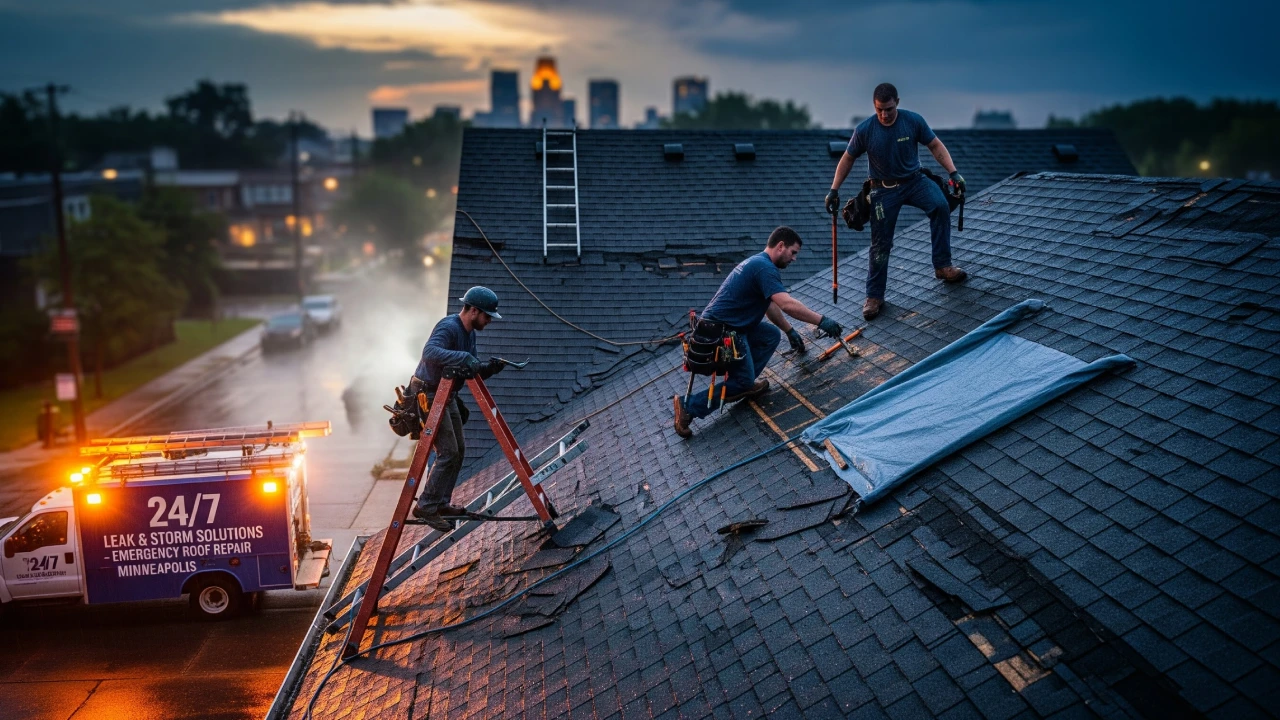
Whether you are dealing with a few missing shingles after a windstorm or a major roof repair emergency leak in the middle of a blizzard, this guide will help you navigate the world of roof repair in Minneapolis. We will cover how to identify damage, what to expect in terms of costs, and how to handle a crisis with emergency roofing repair services.
Why Minneapolis Roofs Face Unique Challenges
In many parts of the country, a roof simply has to shed rain. In Minneapolis, MN, a roof has to be a structural superhero. Our climate presents three specific “roof killers” that every homeowner should watch for.
1. Ice Dams: The Silent Winter Threat
Ice dams are perhaps the most common cause of a roof repair emergency in Minnesota. They occur when heat escapes from your attic, melting the snow on the upper parts of your roof. As that water flows down to the cold eaves, it refreezes, creating a “dam” of ice. Behind this dam, liquid water pools and seeps under your shingles, eventually dripping into your ceiling.
2. Hail and Wind Damage
Minneapolis sits right in a zone where summer thunderstorms can turn destructive in minutes. High-velocity winds can peel back shingles like orange skin, while large hail can bruise or crack the protective granules of your roof, leading to premature aging and leaks.
3. Heavy Snow Loads
Wet, heavy snow can weigh up to 20 pounds per cubic foot. For older homes or roofs that have already been weakened by age, the sheer weight of a Minneapolis “mega-storm” can cause structural sagging or, in extreme cases, partial collapse.
Identifying a Roof Repair Emergency
Not every drip is an emergency, but waiting too long can turn a minor fix into a $20,000 catastrophe. If you experience any of the following, you likely need emergency roofing repair services immediately:
- Active Interior Leaks: If water is actively dripping into your living space, it is already bypassing your shingles, underlayment, and decking.
- Large Areas of Missing Shingles: If a storm has left large patches of your roof deck exposed to the elements, your home is at immediate risk of water damage.
- Structural Sagging: If you notice a “dip” in your roofline from the street, or if your interior ceilings are bowing, the integrity of your home is compromised.
- Fallen Tree Limbs: A heavy branch can puncture a roof and even damage the rafters below.
Pro Tip: Never climb onto your roof during or immediately after a storm. It is incredibly dangerous. Instead, use binoculars to inspect for damage from the ground or call a pro who offers drone inspections.
Also Read: Mitten Siding: Why It’s a Preferred Option
Choosing the Right Method: Repair vs. Replacement
When you call a specialist for roof repair Minneapolis MN, they will evaluate whether a patch is enough or if it’s time for a full replacement.
| Factor | Roof Repair | Roof Replacement |
| Best For | Small leaks, minor hail damage, or 1–2 missing shingles. | Roofs older than 20 years, widespread storm damage, or recurring leaks. |
| Cost | $400 – $1,500 (avg. emergency call) | $12,000 – $20,000+ (standard MN home) |
| Timeframe | Usually completed in a few hours. | Takes 1 to 3 days. |
| Longevity | Extends current roof life by 2–5 years. | Provides 25–50 years of protection. |
Step-by-Step: What to Do During a Roof Repair Emergency Leak
If you wake up to a leak in the middle of the night, don’t panic. Follow these steps to minimize the damage until roof repair emergency pros arrive.
1. Clear the Area
Move furniture, electronics, and valuables away from the leak. If you can’t move them, cover them with heavy plastic sheeting.
2. Contain the Water
Place buckets under the drip. If you see a “bulge” in the ceiling paint where water is collecting, carefully poke a small hole in the center with a screwdriver. This allows the water to drain into the bucket rather than spreading across the entire ceiling and causing a collapse.
3. Document Everything
Take photos and videos of the leak and any damage to your belongings. This is critical for your insurance claim later.
4. Call for Professional Tarping
In a roof repair emergency Minneapolis, contractors may not be able to fix the shingles while it’s still raining or snowing. However, they can perform “emergency tarping.” This involves securing a heavy-duty, waterproof tarp over the damaged area to stop the water entry until the weather clears.
Also Read: LP SmartSide ExpertFinish: A Strong Option for Siding
Understanding Costs in Minneapolis (2025 Estimates)
Logistics and material costs in Minnesota can vary, but here are the general price points you should expect for emergency roofing repair services:
- Emergency Call-Out Fee: Most companies charge an extra $100 to $300 for after-hours or holiday response.
- Tarping Services: Expect to pay $600 to $2,000 depending on the size of the area and the steepness of the roof.
- Minor Leak Repair: Simple shingle replacement or flashing repair usually runs between $500 and $1,400.
- Full Roof Replacement: In Minneapolis, a standard asphalt shingle roof for a 2,000 sq. ft. home typically costs between $14,000 and $21,000.
Popular Roofing Materials for the Twin Cities
If your roof repair Minneapolis turns into a replacement, choosing the right material is vital for surviving the next decade of Minnesota winters.
- Asphalt Shingles: The most popular choice due to affordability. Look for “Class 4” impact-resistant shingles, which can handle hail better and may even lower your insurance premiums.
- Metal Roofing: Gaining massive popularity in MN. Snow slides right off, preventing ice dams, and they can last 50+ years.
- Synthetic/Composite: These mimic the look of slate or wood shakes but are made of durable polymers that won’t crack in sub-zero temperatures.
How to Find a Reliable Minneapolis Roofer
When you’re in a rush for emergency roofing repair services, it’s easy to fall for “storm chasers”—contractors who move from city to city after big storms. Protect yourself by checking for these three things:
- A Local Address: Ensure they have a physical office in the Twin Cities metro area.
- MN License and Insurance: In Minnesota, a residential roofer must be licensed by the Department of Labor and Industry. Ask for their “BC” (Building Contractor) number.
- Workmanship Warranty: A good roofer doesn’t just offer a manufacturer’s warranty on the shingles; they offer their own warranty on the labor.
Conclusion
Your home is likely your biggest investment, and the roof is what keeps it safe. Whether you are dealing with a standard roof repair Minneapolis MN or a high-stakes roof repair emergency leak, the key is to act fast. By understanding the signs of damage and knowing who to call for emergency roofing repair services, you can protect your home from the worst of the Minnesota elements.
Stay proactive with annual inspections, keep those gutters clear to prevent ice dams, and always have a trusted local roofer on speed dial before the next storm hits.
Also Read: Roofing Material Choices: Asphalt vs Metal vs Composite