
When the first “clipper” system sweeps through Minnesota, your roof becomes your home’s most important defense. A failed roof in January isn’t just a nuisance; it can lead to a desperate search for emergency roof repair Minneapolis services in the middle of a blizzard. According to the National Weather Service, the Twin Cities experience some of the coldest average temperatures of any major U.S. metro area, making material choice a matter of survival for your home.
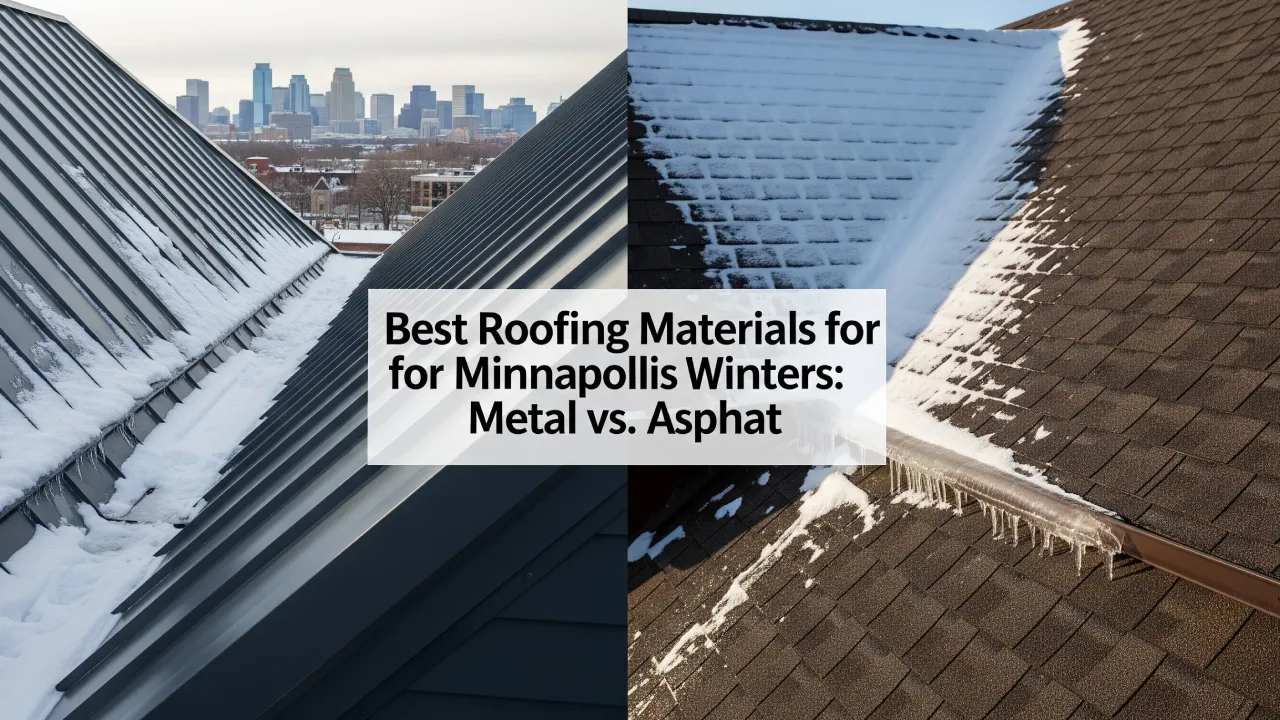
To avoid the stress of a mid-winter leak, choosing the right material during a roof replacement Minneapolis project is critical. Here is a breakdown of the materials that actually stand up to the “Bold North.”
1. Metal Roofing: The Gold Standard for Snow
In 2026, metal roofing has surged in popularity across the Twin Cities, and for good reason. Whether you choose standing-seam panels or stone-coated steel, metal is arguably the best performer in cold climates.
Why It Works for Minneapolis
- Snow Shedding: Unlike textured shingles, metal is smooth. Snow slides off before it can accumulate and create a dangerous weight load.
- Ice Dam Prevention: Because snow slides off and metal warms up quickly under the winter sun, the conditions that create ice dams are significantly reduced.
- Durability: A high-quality metal roof can last 50+ years, meaning this might be the last time you ever need to hire roofing companies Minneapolis MN.
The Downside
The primary barrier is the upfront cost, which can be 2 to 3 times higher than asphalt. However, when you factor in the lack of future roof repair Minneapolis costs, the long-term value is undeniable.
Also Read: Roofing Material Choices: Asphalt vs Metal vs Composite
2. Luxury & Impact-Resistant Asphalt Shingles
Asphalt remains the most common choice offered by roofing contractors Minneapolis, but not all shingles are created equal. For our winters, “standard” shingles often aren’t enough.
Class 4 Impact Resistance
Minneapolis homeowners should look for “Class 4” rated shingles. These are engineered to remain flexible in sub-zero temperatures. While standard shingles can become brittle and crack when frozen, Class 4 shingles can withstand both heavy snow pressure and the high-speed hail common in Minnesota summers.
Architectural vs. 3-Tab
Never settle for 3-tab shingles in the Midwest. Architectural (or dimensional) shingles are thicker, heavier, and offer much better wind resistance—a must-have during those biting February windstorms.
3. Synthetic (Composite) Slate and Shake
If you love the look of a historic Kenwood mansion or a rustic North Shore cabin, synthetic materials are a game-changer. These are made from advanced polymers and recycled rubber/plastics.
The Winter Benefit
- Weight: Real slate is incredibly heavy and can require structural reinforcement to handle Minnesota snow loads. Synthetic slate provides the same look at a fraction of the weight.
- Insulation: Many composite materials offer higher R-values (insulation ratings) than asphalt, helping you keep your heating bills lower.
- Zero Moisture Absorption: Unlike real wood shakes, which can rot or crack during freeze-thaw cycles, synthetic shakes are completely moisture-proof.
Also Read: Mitten Siding: Why It’s a Preferred Option
Comparing the “Winter Winners”
Before you call one of the many roofing companies Minneapolis MN, use this table to see which material fits your priorities:
| Material | Snow Shedding | Durability | Initial Cost | Est. Lifespan |
| Metal | Excellent | Exceptional | High | 50–70 Years |
| Class 4 Asphalt | Moderate | High | Budget-Friendly | 20–25 Years |
| Synthetic Slate | Good | High | Moderate/High | 40–50 Years |
| Cedar Shakes | Poor | Moderate | High | 20–30 Years |
The “Hidden” Winter Essentials: Beyond the Shingles
Even the best material will fail if the system underneath is poorly designed. When interviewing roofing contractors Minneapolis, ensure they include these three winter-specific upgrades:
1. Enhanced Ice and Water Shield
In Minneapolis, building code requires an ice and water barrier, but expert roofing companies Minneapolis MN often go beyond the minimum. They will install this waterproof membrane at least 6 feet up from the eaves (rather than the standard 3 feet) to provide extra protection against deep ice dams.
2. Balanced Attic Ventilation
If your attic is too warm, it melts the snow on your roof, which then refreezes at the cold gutters to form ice dams. A winter-ready roof requires a balanced system of intake (soffit) and exhaust (ridge) vents to keep the roof temperature consistent with the outside air.
3. Heavy-Duty Flashing
Most leaks that lead to an emergency roof repair Minneapolis call happen at the “junctions”—around chimneys, skylights, and valleys. In cold climates, these areas should be reinforced with premium metal flashing that won’t pull away when the house “shifts” during deep freezes.
When to Seek Emergency Roof Repair Minneapolis
Even with a great roof, a freak storm or a massive ice dam can cause issues. You should call for emergency roofing repair services if:
- You see “icicles” forming inside your attic or along your interior ceiling.
- A large “ice mound” has formed on your roof that is causing water to back up under the shingles.
- You notice a sudden sag in your roofline under the weight of fresh snow.
Conclusion
Choosing a roof for a Minneapolis winter is about finding the balance between your budget and the level of protection your home needs. While asphalt is the most affordable entry point, materials like metal and synthetic slate offer long-term peace of mind that can save you thousands in future roof repair Minneapolis bills.
If you aren’t sure which material is right for your specific home, start by reaching out to reputable roofing companies Minneapolis MN for a professional assessment. They can check your current attic insulation and ventilation—the two factors that matter just as much as the shingles themselves.
Also Read: Roof Repair Minneapolis: Everything Homeowners Need to Know