
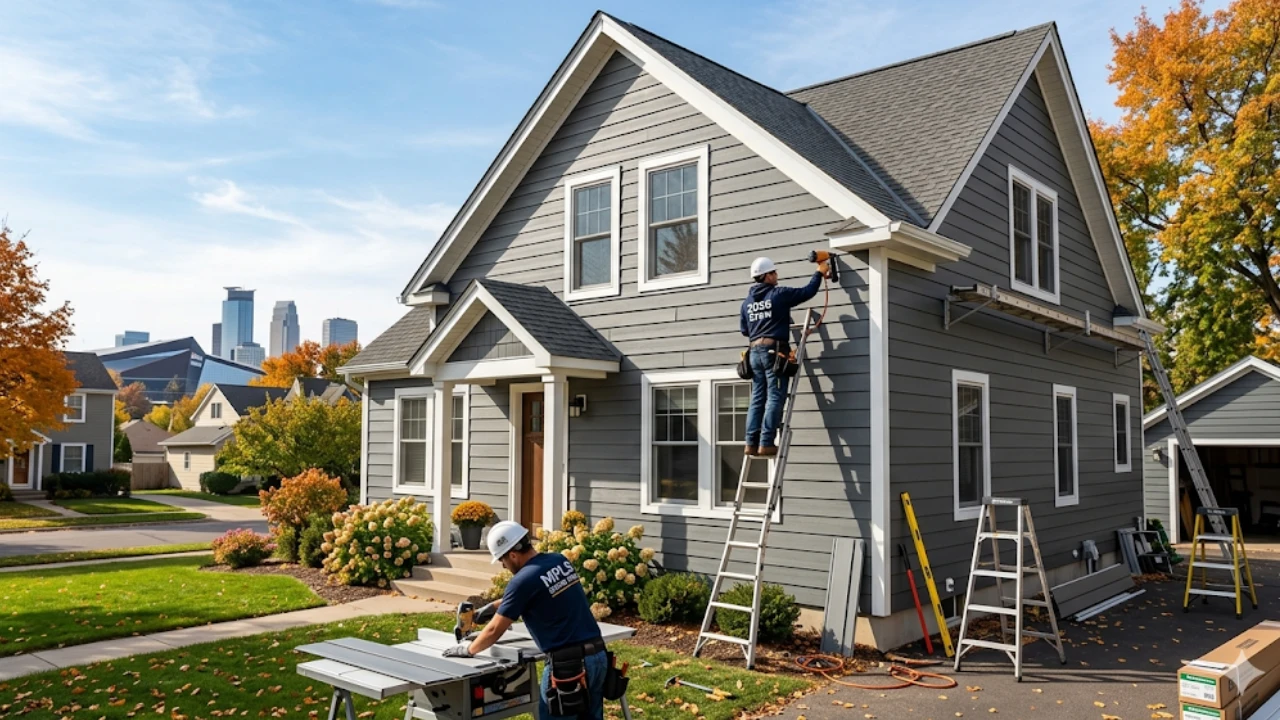
Minneapolis winters are brutal on homes. By the time April rolls around, your siding has endured months of sub-zero temperatures, ice, wind-driven snow, and freeze-thaw cycles that test every material to its limits. For many Twin Cities homeowners, spring is when years of accumulated damage finally becomes impossible to ignore — warped panels, cracked caulk, moisture stains, and energy bills that just keep climbing.
If you’re searching for siding companies in Minneapolis or wondering whether it’s finally time for an exterior siding replacement, this guide is written for you. We’ll cover the most common warning signs, the siding materials that actually hold up in a Minnesota climate, what replacement costs look like in 2026, and what to expect from the process.
At Knutson Partners, we’ve been installing residential siding across the Minneapolis–St. Paul metro for years. Here’s everything we know distilled into one honest, practical guide.
1. 5 Warning Signs You Need New Siding
Many homeowners wait too long because siding deterioration happens gradually. By the time the damage is obvious from the street, moisture may have already penetrated the wall cavity, leading to much more expensive repairs. Watch for these five signs:
1. Warping, Buckling, or Bulging Panels
Siding that no longer lies flat against the wall is losing its ability to shed water. This is especially common with older vinyl siding that was installed without adequate expansion gaps — Minnesota’s 100°F+ temperature swings (from -30°F winters to 90°F+ summers) cause materials to expand and contract dramatically, and panels installed too tightly will eventually buckle.
2. Moisture Intrusion or Interior Wall Damage
Water stains on interior walls, peeling paint near windows or doors, or soft drywall near exterior walls are red flags that your siding’s weather barrier has been compromised. Once moisture gets into the wall assembly, you’re looking at potential mold, rot, and insulation damage — costs that dwarf a simple siding replacement.
3. Rising Heating and Cooling Bills
Older or damaged siding — especially if the underlying housewrap or rigid foam insulation has degraded — allows significant heat loss in winter and heat gain in summer. If your energy bills have crept up with no clear explanation, your siding system may be to blame. Insulated vinyl siding or fiber cement with continuous foam backing can meaningfully reduce energy loss.
4. Faded, Chalking, or Peeling Finish
Some surface fading is normal over decades of Minnesota UV exposure. But if your siding has turned chalky, is peeling heavily, or has lost its finish unevenly, it’s likely approaching the end of its functional life. Most quality vinyl and fiber cement siding carries color warranties — if yours is showing these signs within warranty, contact your contractor about a claim.
5. Visible Cracks, Holes, or Gaps at Seams
Cracks and gaps are direct entry points for water and pests. Even small cracks in fiber cement or wood siding can allow winter moisture to infiltrate and freeze, causing the crack to widen dramatically by the following spring. Individual panel repair may be appropriate for minor isolated damage — but if you’re finding widespread cracking, full replacement is typically more cost-effective.
Walk your home’s perimeter after the snow melts. Look at caulk joints around windows and doors, check for discoloration at the bottom of panels (a sign of moisture wicking), and press gently on any soft-looking areas. Catching problems in spring gives you the full summer and fall installation season to address them.
2. Siding Materials for Minnesota’s Climate: Pros & Cons
Not all siding performs equally in a Minnesota climate. The key considerations are: performance in extreme cold, resistance to freeze-thaw cycling, moisture resistance, and warranty length. Here’s how the most popular options compare:
| Material | Lifespan | MN Climate Fit | Avg Cost/sq ft (installed) | Best For |
|---|---|---|---|---|
| Vinyl (standard) | 20–30 years | Good | $4–$8 | Budget-conscious homeowners |
| Insulated Vinyl | 25–35 years | Excellent | $6–$12 | Energy efficiency, cold climates |
| Fiber Cement (James Hardie) | 30–50 years | Excellent | $8–$16 | Durability, curb appeal, resale value |
| Engineered Wood | 20–30 years | Good (with proper sealing) | $6–$11 | Natural wood look on a budget |
| Steel | 40–60 years | Excellent | $9–$18 | Maximum durability, hail resistance |
| Natural Wood | 15–25 years (maintained) | Fair (high maintenance) | $9–$20+ | Historic homes, aesthetic priority |
Note: Costs are estimates for the Minneapolis metro and vary by home size, prep work required, and contractor. Get multiple quotes for your specific project.
Why Fiber Cement Is So Popular in Minnesota
James Hardie fiber cement siding has become the most common premium siding choice in Minnesota for good reason: it’s engineered specifically for climates with extreme temperature swings, holds paint better than wood, resists moisture and rot, and is non-combustible. The HardieZone® system — where the company manufactures products calibrated for specific climate regions — means Minneapolis homeowners get siding formulated for our specific freeze-thaw conditions.
The Case for Insulated Vinyl
If fiber cement’s price point is a concern, insulated vinyl is the most practical upgrade over standard vinyl. The foam backing bonded to the panel prevents the hollow sound standard vinyl produces when struck, adds meaningful R-value (typically R-2 to R-5), and gives panels better rigidity in cold temperatures — which means less cracking and buckling. In Minnesota’s heating-dominated climate, the energy savings can contribute to payback over time.
3. Siding Replacement Cost in Minneapolis (2026)
Homeowners researching exterior siding replacement in Minneapolis often get sticker shock from online national average estimates that don’t reflect local labor rates, disposal costs, or the scope that many older Twin Cities homes require. Here’s a more grounded picture:
Average Cost Ranges (Minneapolis Metro, 2026)
- Small home (under 1,200 sq ft): $8,000 – $15,000
- Mid-size home (1,200–2,000 sq ft): $14,000 – $28,000
- Larger home (2,000–3,000 sq ft): $24,000 – $45,000+
These ranges assume full replacement of all siding surfaces. Fiber cement projects trend toward the higher end; standard vinyl toward the lower. Two-story homes add cost due to staging requirements.
What Drives Up the Cost
Several factors push a project above the baseline estimate:
- Old siding removal and disposal: If your existing siding is multiple layers thick (common in older Minneapolis homes), removal adds labor and disposal cost.
- Wood rot repair: Damage discovered beneath old siding must be repaired before new siding can be installed. Many estimates are subject to change once old siding is removed and the extent of rot is visible.
- Housewrap or moisture barrier replacement: If your existing housewrap is torn, degraded, or absent (homes built before the 1990s often lack modern moisture barriers), a new barrier is essential and adds to cost.
- Window and door trim: New siding often requires replacing or repainting trim for a clean finish.
- Story height and difficult access: Multi-story homes require staging that adds to labor hours.
Financing and Rebates
Several programs can offset siding replacement costs for Minneapolis homeowners:
- Xcel Energy rebates: If your project includes adding continuous insulation, you may qualify for energy efficiency rebates through Xcel Energy’s home improvement program.
- Minnesota Housing Finance Agency (MHFA): The Fix-Up Fund and other MHFA programs offer low-interest financing for home improvement projects, including exterior work, for income-qualifying homeowners.
- Federal Tax Credits: Insulation improvements (including insulated siding that qualifies) may be eligible for the Energy Efficient Home Improvement Credit under the Inflation Reduction Act. Consult a tax professional for current eligibility rules.
4. What the Siding Replacement Process Looks Like
If you’ve never gone through a full exterior siding replacement, knowing what to expect helps reduce anxiety and ensures the project goes smoothly.
Step 1: In-Home Assessment and Estimate
A reputable siding contractor in Minneapolis will conduct an in-person walkthrough — not just a quick eyeball from the driveway. They should measure your home’s square footage, note any problem areas, discuss material options, and provide a written estimate that itemizes labor, materials, and disposal. Be cautious of contractors who provide binding quotes without ever setting foot on your property.
Step 2: Material Selection and Ordering
Once you’ve signed a contract and selected your siding profile, color, and any accessories (trim, soffits, fascia), your contractor places the material order. Lead times for specialty colors in fiber cement can run several weeks — so starting the process in spring is smart for a summer installation window.
Step 3: Removal and Wall Inspection
This is the stage where surprises can emerge. As old siding comes off, contractors may find rot, missing insulation, outdated housewrap, or evidence of previous water damage. A good contractor will document everything they find and discuss options with you before proceeding — not just patch it and hope you don’t notice.
Step 4: Moisture Barrier and Flashing Installation
Before any new siding goes on, a continuous moisture barrier (housewrap or building paper) is installed, and all windows, doors, and penetrations are properly flashed. This step is non-negotiable for long-term performance and is often where lower-cost contractors cut corners.
Step 5: Siding Installation
Panels are installed according to the manufacturer’s installation guidelines — a critical detail, since many material warranties require specific installation methods. Proper nailing patterns, expansion gaps (especially important in Minnesota’s climate), and sequencing around windows all matter for longevity.
Step 6: Trim, Caulking, and Cleanup
All corners, window surrounds, and transitions are trimmed and caulked. A thorough crew will leave your yard cleaner than they found it — all debris, old siding, and packaging removed and properly disposed of.
- Are you licensed in Minnesota? (Residential contractors must be licensed with the Minnesota Department of Labor and Industry)
- Is your crew employees or subcontractors — and are both covered by your insurance?
- What does the warranty cover — materials only, or labor too?
- How do you handle unexpected rot or damage discovered mid-project?
- Do you pull permits when required?
5. When Insurance Covers Siding Replacement
Homeowners insurance may cover siding replacement when the damage is caused by a sudden, covered peril — typically hail, wind, or falling objects. Here’s what to know:
Hail Damage Is the Most Common Claim in Minnesota
Minnesota is one of the most hail-active states in the country. A single severe storm can dimple, crack, or puncture vinyl siding, and chip or fracture fiber cement — damage that isn’t always visible from the ground but can be clearly identified by an experienced inspector.
If your neighborhood experienced a significant hailstorm in the past 12–24 months, it’s worth having your siding inspected. Even if you don’t file a claim, documentation of the damage provides important information about the remaining life of your siding and potential warranty implications.
What Insurance Doesn’t Cover
Age-related deterioration, deferred maintenance, and pre-existing conditions are typically excluded. If your siding was already failing before a storm event, insurers may argue the storm merely accelerated existing deterioration — a common source of disputes.
Work With a Contractor Experienced in Insurance Claims
At Knutson Partners, we work alongside homeowners through the insurance process — conducting damage documentation, coordinating with adjusters, and ensuring the scope of work matches what your policy covers. If you believe your siding was damaged by a storm, contact our storm damage team for a free inspection before calling your insurer.
6. How to Choose a Siding Contractor in Minneapolis
The Minneapolis–St. Paul metro has no shortage of siding companies, and the range in quality is enormous — from established local contractors with decades of experience to storm-chasing crews that show up after hail events and disappear before warranty issues emerge. Here’s how to tell the difference:
Verify Minnesota Contractor Licensing
Residential contractors working on siding in Minnesota must be licensed with the Minnesota Department of Labor and Industry (DLI). You can verify a contractor’s license status online. This is a baseline requirement — not a differentiator on its own, but an immediate disqualifier if they can’t provide it.
Look for Manufacturer Certifications
James Hardie, for example, has a certification program (HardiePro™) that requires contractors to complete training in proper installation techniques. Certified contractors often have access to extended warranty coverage on behalf of homeowners. Ask whether your contractor holds any manufacturer certifications relevant to the material you’re choosing.
Check References and Recent Projects
Ask for three recent references in the Minneapolis area — and actually call them. Ask about timeline, how surprises were handled, whether the crew was respectful of their property, and whether they’d hire the contractor again. Online reviews (Google, BBB) are a starting point, but direct references reveal more.
Get Three Written Bids
Three bids give you a meaningful sense of market pricing. Be cautious of bids that are significantly below the others — in residential siding, low bids typically mean reduced crew experience, thinner materials, or installation shortcuts that don’t become visible until after the warranty period.
Understand What the Warranty Actually Covers
Material warranties and workmanship warranties are different things. A 30-year fiber cement material warranty doesn’t protect you from improper installation that allows water infiltration. Ask specifically: what workmanship warranty do you provide, and what is the process if I have a problem in year two?
Ready to Get a Siding Estimate in Minneapolis?
Knutson Partners provides free, no-pressure siding assessments for Minneapolis–St. Paul homeowners. We’ll inspect your current siding, identify problem areas, and give you an honest recommendation — whether that’s full replacement, targeted repairs, or keeping what you have.
Get a Free Siding Estimate →7. FAQ: Siding Replacement in Minneapolis
How long does siding replacement take?
Most full siding replacements on a single-family Minneapolis home take 3–7 days, depending on home size, story count, and the extent of any repair work discovered during removal. Weather delays are also a factor — siding installation requires dry conditions and temperatures above roughly 40°F for proper sealing.
Can I install new siding over my existing siding?
Technically yes — it’s done — but most experienced contractors in Minnesota recommend against it. Leaving old siding in place traps existing moisture, makes it impossible to inspect and repair the wall assembly, adds weight to the structure, and can create uneven surfaces that cause the new siding to perform poorly. It may also reduce the thickness of window and door trim returns to an aesthetically awkward dimension. Full removal is worth the additional cost.
What’s the best siding for Minnesota’s climate?
Fiber cement and insulated vinyl consistently perform best in Minnesota’s climate due to their resistance to freeze-thaw cycling, moisture, and UV degradation. Steel is the most durable option for hail-prone areas. Natural wood requires the most maintenance and is generally not recommended unless you’re committed to repainting or restaining every 5–7 years.
How do I know if my siding damage is covered by insurance?
The key question is causation: was the damage caused by a sudden, covered peril (hail, wind, storm) or by gradual deterioration? A licensed contractor experienced in storm damage claims can help document evidence of storm causation. If you’re unsure, request a free inspection before contacting your insurer. See our storm damage page for more information on what to look for.
Do I need a permit for siding replacement in Minneapolis?
In Minneapolis, a permit is generally required for full siding replacement projects. The City of Minneapolis requires a permit for work that affects the weather-resistant exterior envelope of a building. A reputable contractor will include permit costs in their estimate and pull the permit on your behalf. Be cautious of contractors who suggest skipping permits — it creates liability for you at resale.
How long does vinyl siding last in Minnesota?
Standard vinyl siding typically lasts 20–30 years in a Minnesota climate when properly installed. Insulated vinyl can extend that to 30–35 years. The biggest drivers of premature failure are improper installation (nailed too tight without expansion gaps) and physical impact damage. Vinyl doesn’t rot, but it can crack in extreme cold if struck.
What’s the difference between commercial and residential siding?
Commercial buildings — apartment buildings, office buildings, retail — typically use different siding systems than single-family homes: metal panels, EIFS (stucco-like systems), or heavier-gauge steel are common. Knutson Partners handles both commercial siding and residential siding in the Minneapolis metro.
The Bottom Line on Siding Replacement in Minneapolis
Spring is the right time to assess your siding. The damage done over winter is fully visible, installation season is opening up, and getting on a contractor’s schedule now means your project can be completed before fall. Whether you’re dealing with obvious failure, want to upgrade your home’s curb appeal, or are simply trying to get ahead of a problem you’ve noticed for a while — the process doesn’t have to be overwhelming.
Start with an honest inspection from a contractor you trust. Understand your material options and their long-term costs. Ask the right questions, get competing bids, and verify licensing. Do those things and you’ll make a decision you’re confident in for decades.
Knutson Partners is a Minneapolis-based general contractor specializing in residential and commercial siding, roofing, windows, and storm damage repair. We’ve served the Twin Cities metro for years and stand behind every project with workmanship warranties. Contact us to schedule a free assessment.