
Choosing the right roofing material is one of the most important decisions a homeowner can make. Your roof protects your home from harsh weather, affects energy efficiency, and plays a major role in curb appeal. With so many roofing material types available today, homeowners often find themselves comparing asphalt shingles, metal roofing, and composite roofing.
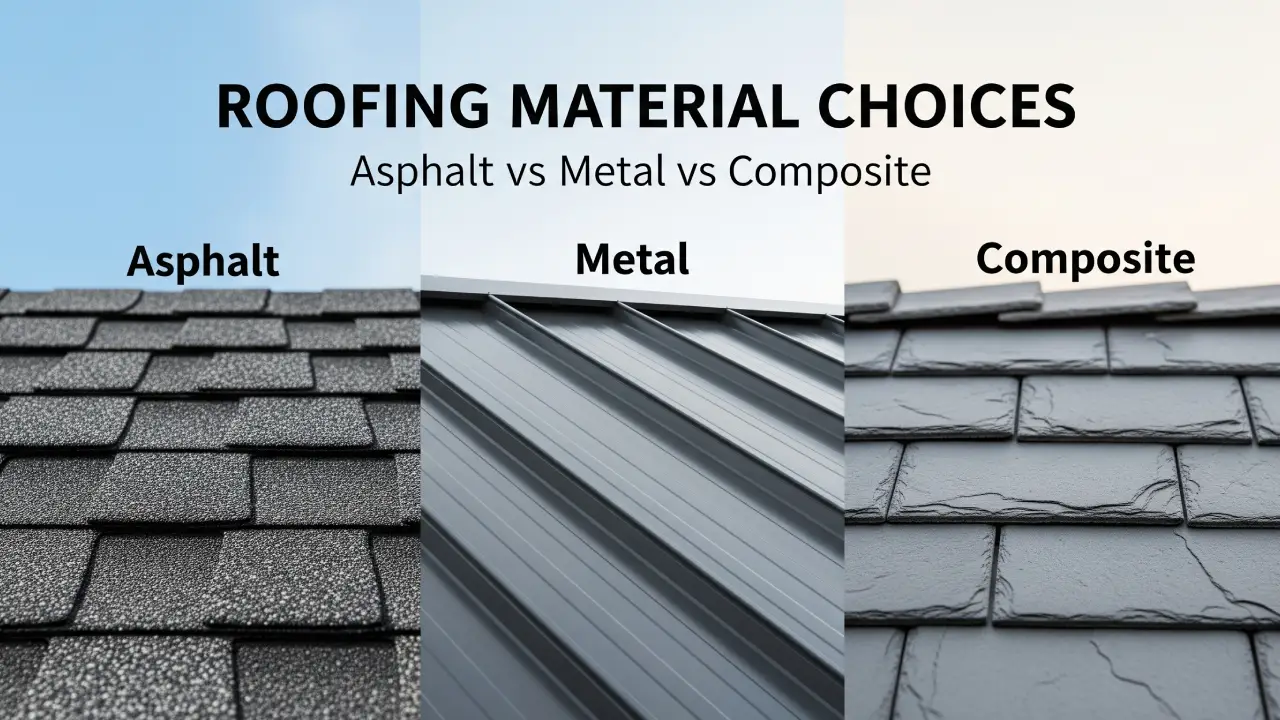
If you live in Minnesota or other cold-weather regions, factors like snow load, temperature changes, wind resistance, and long-term cost matter even more. In this guide, we break down asphalt vs metal vs composite roofing to help you understand roofing cost in MN, roof durability, eco-friendly roofing options, and which material is best for your home.
Understanding Common Roofing Material Types
Before choosing a roof, it’s important to understand the most widely used roofing materials:
- Asphalt shingles – Traditional and affordable
- Metal roofing – Durable and energy-efficient
- Composite roofing – Modern, long-lasting, and stylish
Each option has its own advantages depending on climate, budget, and long-term goals.
Asphalt Roofing: The Most Popular Choice
Asphalt shingles are the most common roofing material used across the U.S., including Minnesota. They are widely available and offer a balance between cost and performance.
Key Features of Asphalt Roofing
- Made from fiberglass or organic mats with asphalt coating
- Available in various colors and styles
- Easy to install and repair
Pros of Asphalt Roofing
1. Affordable Roofing Cost in MN
Asphalt shingles are usually the lowest-cost option upfront, making them ideal for budget-conscious homeowners.
2. Easy Installation and Repairs
Installation is fast, and damaged shingles can be replaced easily.
3. Wide Design Options
Available in architectural, 3-tab, and premium styles to match different home designs.
Cons of Asphalt Roofing
- Shorter lifespan compared to metal and composite
- Less resistant to extreme weather
- Not the most eco-friendly roofing option
Average Lifespan
15–25 years, depending on quality and maintenance.
Metal Roofing: Strength and Efficiency Combined
Metal roofing has gained popularity in recent years, especially in areas with extreme weather. It performs exceptionally well in snow-heavy climates like Minnesota.
Key Features of Metal Roofing
- Made from steel, aluminum, or zinc
- Available in panels or metal shingles
- Highly durable and weather-resistant
Pros of Metal Roofing
1. Exceptional Roof Durability
Metal roofs can last 40–70 years, making them one of the most durable roofing materials available.
2. Ideal for Minnesota Weather
Metal sheds snow easily, reducing ice dams and snow buildup.
3. Energy Efficiency
Reflects sunlight, reducing cooling costs in warmer months.
4. Eco-Friendly Roofing Option
Metal roofing is recyclable and often made from recycled materials.
Cons of Metal Roofing
- Higher upfront cost
- Can be noisy during heavy rain without proper insulation
- Requires professional installation
Average Lifespan
40–70 years
Composite Roofing: The Modern Roofing Solution
Composite roofing, also known as synthetic roofing, is a newer roofing option designed to mimic the appearance of natural materials while offering superior performance.
Key Features of Composite Roofing
- Made from engineered polymers or recycled materials
- Designed to resemble slate, wood, or tile
- Lightweight yet extremely strong
Pros of Composite Roofing
1. Excellent Roof Durability
Composite roofs often last 40–50 years and resist cracking, fading, and impact damage.
2. Low Maintenance
Unlike natural materials, composite roofing doesn’t rot, warp, or absorb moisture.
3. Eco-Friendly Roofing Choice
Many composite products are made from recycled materials and are recyclable.
4. Versatile Design Options
Offers premium aesthetics without the weight of slate or wood.
Cons of Composite Roofing
- Higher upfront cost than asphalt
- Limited availability compared to asphalt
- Installation must be done correctly for warranty compliance
Average Lifespan
40–50 years
Roofing Cost MN: Comparing the Three Options
Roofing costs in Minnesota vary based on material, labor, roof size, and complexity.
| Roofing Material | Average Cost (MN) | Lifespan |
|---|---|---|
| Asphalt | Low | 15–25 years |
| Metal | Medium to High | 40–70 years |
| Composite | Medium to High | 40–50 years |
While asphalt has the lowest upfront cost, metal and composite roofing often provide better value over time due to longevity and lower maintenance needs.
Roof Durability: Which Material Performs Best?
Asphalt Roofing
- Moderate durability
- Prone to weather damage over time
Metal Roofing
- Excellent resistance to wind, snow, and hail
- Ideal for extreme climates
Composite Roofing
- Strong impact resistance
- Designed for long-term durability
Best for durability: Metal and composite roofing
Also Read: LP SmartSide ExpertFinish: A Strong Option for Siding
Eco-Friendly Roofing: Making a Sustainable Choice
If sustainability is a priority, roofing material choice matters.
Asphalt
- Petroleum-based
- Limited recyclability
Metal
- Fully recyclable
- Reflective, reducing energy use
Composite
- Often made from recycled materials
- Long lifespan reduces waste
Best eco-friendly roofing options: Metal and composite roofing
Which Roofing Material Is Best for Your Home?
Choose Asphalt Roofing If:
- You need a cost-effective solution
- You plan to sell the home within 10–15 years
- Budget is your top priority
Choose Metal Roofing If:
- You want maximum durability
- Your home experiences heavy snow
- You value energy efficiency and sustainability
Choose Composite Roofing If:
- You want premium aesthetics
- You’re planning long-term ownership
- You want a balance of beauty, strength, and sustainability
Also Read: GAF Roofing Systems: Benefits, Warranties & Options
Long-Term Value vs Upfront Cost
Many homeowners focus only on upfront price, but long-term value matters more.
- Asphalt may need replacement twice in 50 years
- Metal or composite roofs may last the entire lifespan of the home
When considering roof durability and maintenance, metal and composite roofing often deliver better overall value.
Installation Quality Matters More Than Material
Even the best roofing material won’t perform well without proper installation. Professional installation ensures:
- Weather-tight sealing
- Proper ventilation
- Warranty protection
- Long-term performance
Hiring experienced roofing contractors is especially important in Minnesota’s challenging climate.
Conclusion
When comparing asphalt vs metal vs composite roofing, there is no one-size-fits-all answer. Each roofing material serves different needs and budgets.
- Asphalt roofing is affordable and widely used
- Metal roofing offers unmatched durability and energy efficiency
- Composite roofing delivers premium looks with long-lasting performance
Understanding roofing material types, roofing cost in MN, eco-friendly roofing options, and roof durability will help you make a confident, informed decision.
Investing in the right roofing material today protects your home, increases property value, and provides peace of mind for decades to come.
Also Read: Metal Roofing vs Asphalt Shingles: Which Lasts Longer?